
Dr Gus Casely-Hayford: connecting communities through art and music in East London
SOAS Professor of Art History of Africa Polly Savage spoke with SOAS alumnus and Professor of Practice Dr Gus Casely-Hayford. He is Director of the V&A East Museum, which opened on 18 April 2026 in Stratford, a rapidly emerging creative hub in East London.
Professor Savage and Dr Gus Casely‑Hayford (PhD History, 1992) discussed the legacy of Africa ’05, the landmark UK‑wide cultural season celebrating African art and culture which Gus helped to lead, and his vision for creating an inclusive museum rooted in East London and shaped by a young and diverse audience.
Watch the interview or read it below.
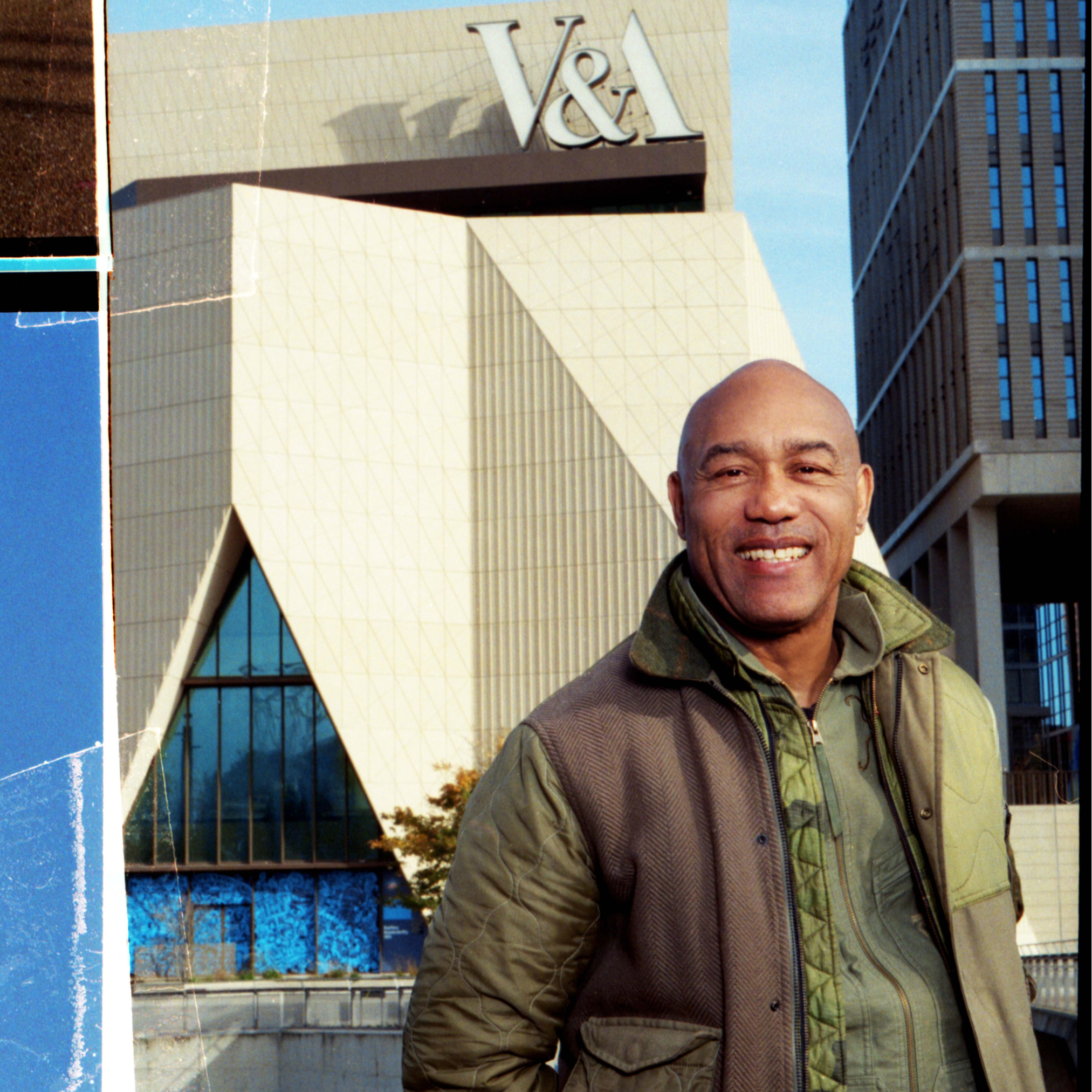
Dr Gus Casely-Hayford (PhD History, 1992) © Lewis Vorn
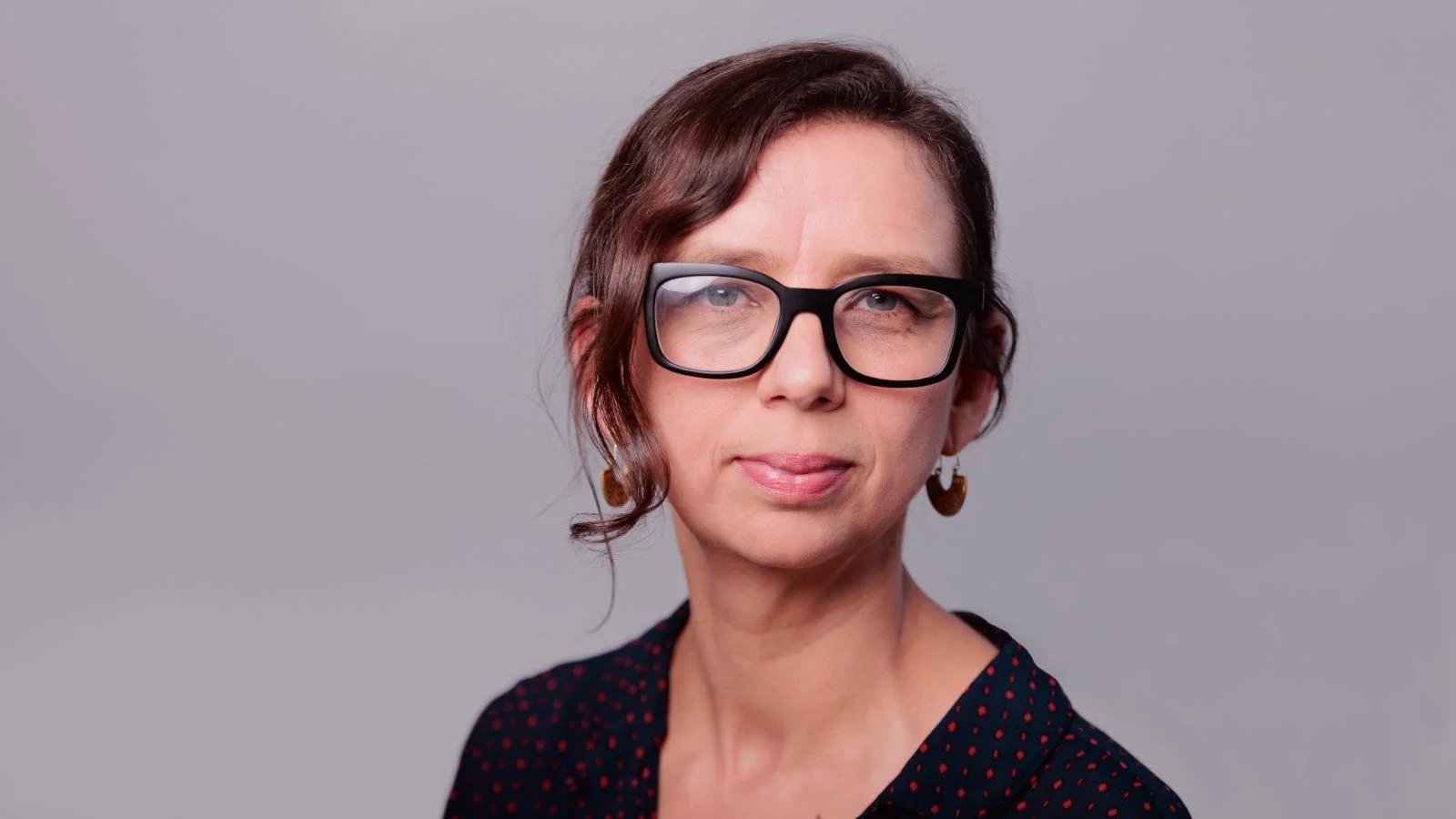
SOAS Professor Polly Savage
P: I’m Polly Savage. I’m a senior lecturer in the history of art of Africa at SOAS, and I’m very happy to be here with Gus Casely-Hayford.
G: I’m Gus Casely-Hayford. I’m the Director of V&A East and a SOAS alum, and I am delighted to be here with Polly for SOAS World.
P: Gus, thank you so much for being here with us. It’s wonderful to see you. I was trying to think back to the first time we met, and I think it was probably around Africa ’05. At the time, I was working at the October Gallery, and you were directing the biggest ever festival of African culture in the UK.
Africa ’05 followed on from Africa ’95, and it was this huge event that you spearheaded and made happen. It was momentous. It would be great to reflect on what’s happened since then, because we didn’t have an Africa ’15 or ’25, but the landscape for African art has changed so dramatically since 2005.
G: It’s a great question, Polly. When you think about where we’ve been and the progress we’ve made over the last 20 years, it has been truly astonishing. The reason that, in 2005, we felt the necessity to create that moment—working with more than 150 institutions and staging more than a thousand events—was that there hadn’t seemed to be the progress over the preceding decade that we had all hoped for.
In 1995 there was a real galvanising of the sector and a sense that we were going to make a difference together. The sad thing was that this progress didn’t really come to pass, even though, in 2005, all of the institutions we worked with were talking about their willingness to engage with Africa and to think about diversity, both in relation to their staff and their programmes.
What has happened since then has been profound. If you look across the contemporary art sector now, many of the biggest and most compelling voices are people of African descent, or people working on the African continent. Many major galleries that once did not feature African artists now foreground Black artists and engage with those narratives in really robust terms.
That said, there are still huge lags in museums, galleries, and universities. It often feels that the resources are not yet there to support what is actually a very large and powerful groundswell.
But I do sense that in strategically important areas there has been real change. One of the strangest examples is in parts of the art market—areas you might expect to be quite conservative—that have, in fact, changed enormously.

‘A Place Beyond’ by Thomas J Price unveiled outside of London’s V&A East Museum. David Parry and PA Media Assignments for the V&A
P: We’re now at this incredible moment of opening a huge new museum that you’re directing. Would you like to say a little about your vision for V&A East and your hopes for it?
G: I came into this role five years ago. Before that, I was Director of the National Museum of African Art in Washington, DC, one of the Smithsonian museums.
I left DC on one of, if not the very last, planes before the pandemic lockdown, and I came back to a London I hadn’t lived in for four years, which felt very different. That difference was partly due to a generational shift: Gen Z, especially through the digital sphere, expressing frustration with older generations around issues of gender (including Me Too), Black Lives Matter, and sustainability.
Voices that had once been more peripheral had gained real momentum through social media. My role at the V&A wasn’t just to deliver a new museum and collection centre in East London; it was also to focus on reaching a new audience—a younger, more diverse audience.
I knew this generation often felt sceptical about museums and about the establishment more broadly. They wanted change—and who can argue with a desire for equity? So I was keen to craft a narrative that was inclusive, opportunity-driven, and both globally minded and locally grounded.
That meant reflecting diversity in our staff, in our collections, and in the atmosphere of the institution itself. Museums can sometimes make you feel that you need to be quiet, behave in a certain way, or even question whether you belong. We wanted to invert that.
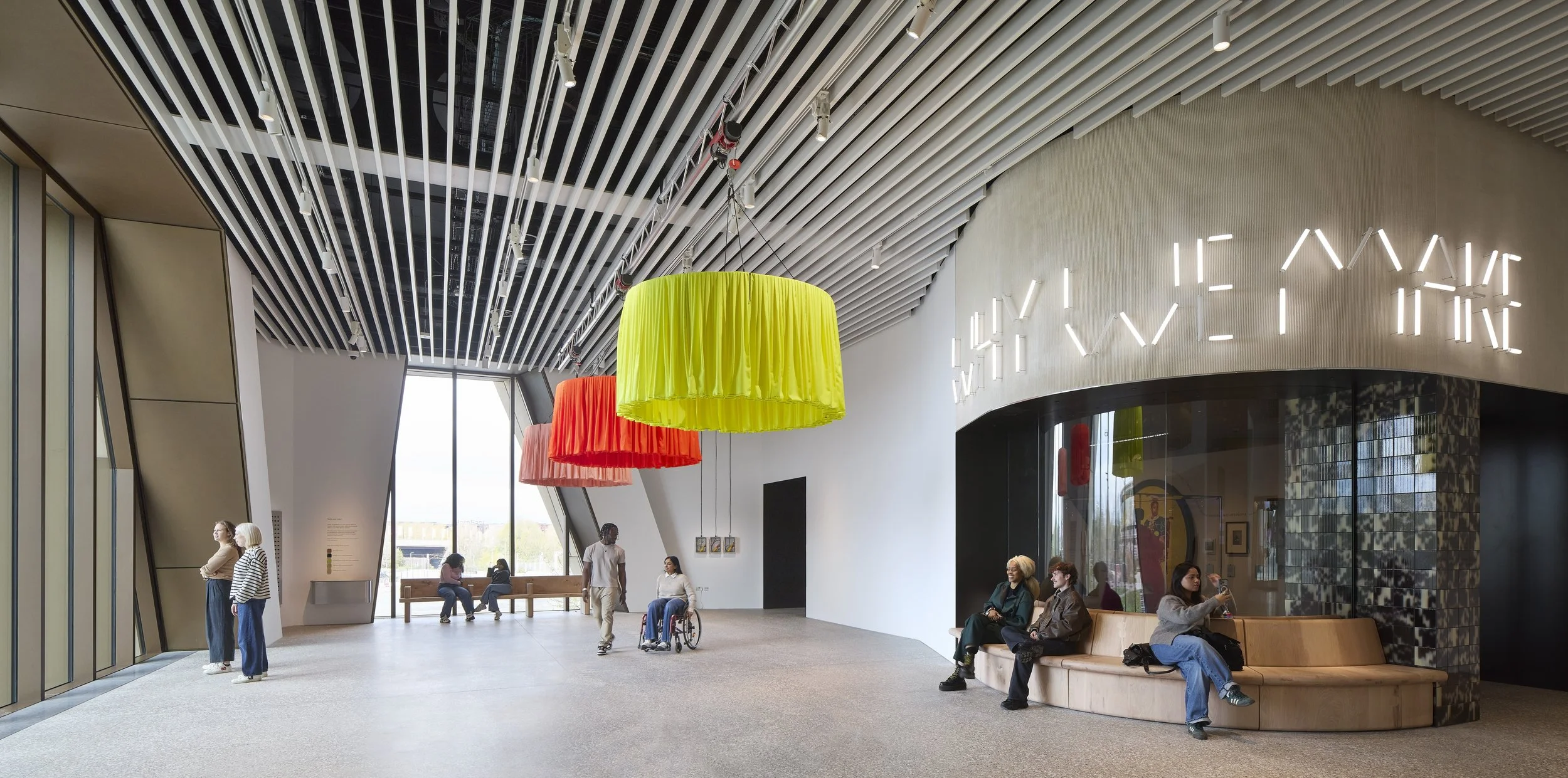
Outside V&A East Museum’s Why We Make galleries © Hufton+Crow
With V&A East and the V&A East Storehouse, the feeling when you enter should be: this is your space. These are public collections. This belongs to you.
One of the first things I did, once restrictions began to lift, was to go out and reconnect with the London I’d left, and to build real relationships with the communities here in East London.
P: You were appointed Professor of Practice by SOAS in 2021, and in that role you’ve done remarkable work speaking with students about developing V&A East.
G: There’s something I’m enormously proud of psychologically—a perspective that was absolutely shaped at SOAS. I recognise it whenever I meet other SOAS alums: an openness to listening, to possibility, and to the voices of those on the margins. That perspective feels increasingly vital in these polarised times.
When building a new institution and working within a national museum founded in the mid-19th century, in an imperial context, it’s essential to be open to difficult questions—and to ask them. Engaging with young people in that process is both a duty and a privilege.
V&A East has taken on the brief of attracting the youngest and most diverse audience of any national museum. As part of that, I’ve visited more than 100 schools in the surrounding boroughs, bringing objects into classrooms and assemblies, and speaking with tens of thousands of young people about their hopes and frustrations.

Inside V&A East Museum’s Why We Make galleries © David Parry for the V&A
I emphasize that these collections don’t belong to senior management—they belong to all of us. They reflect our shared histories: stories of empire, enslavement, inequality, and gender disparity, but also stories of extraordinary creativity and resilience under immense pressure.
Sitting down with SOAS students gave me space to talk through the thinking and the internal mechanics behind building this vision, working within a 170-year-old institution while trying to forge an inclusive future. That process is difficult, and it should be.
Debate and contestation are essential. SOAS, with its informed, agile minds, is the perfect environment for that. I didn’t see the role as extracurricular; I saw it as absolutely core to what my role demands.
P: Do you still get to handle objects? Do you get stuck at that level?
G: I’m an art historian at heart. That’s where it began, and it never leaves you. I still broadcast and write. Just this week, I finished a book about the value of art, using need as a lens to look at objects I love within the V&A collection and beyond.
The importance of art in our lives isn’t appreciated enough, particularly outside the arts sector. It’s been painful to see the arts marginalised in the wider curriculum.

V&A East Museum team prepares Stormzy’s 2019 Glastonbury vest, designed by Banksy. Inside V&A East Museum’s inaugural exhibition, The Music is Black_ A British Story. © Adama Jalloh for the V&A.
One of the great joys of my work has been creating new exhibitions. Our opening exhibition, The Music Is Black: A British Story, tells 125 years of Black British music. We worked with major artists who were incredibly generous. Many objects initially came as loans, but after seeing how we worked, those artists donated them. That’s been deeply moving.
We’ve also created major commissions. Outside the building stands the largest Thomas J. Price sculpture ever made, a five-metre-tall bronze of a young woman holding a mobile phone, gazing toward the horizon. It’s called A Place Beyond, and it’s about aspiration, dreams, and possibility—everything the institution stands for.
Inside, we’ve installed a stunning stained-glass work by Tania Bruguera. It’s blue and white, maps London, and incorporates the aspirations of young East Londoners. The Thames curves through it; flowers bloom; and, woven into the stems, are the hopes and ambitions of those young people.
These works speak directly to issues of equity, global imbalance, and hope. If you don’t leave feeling optimistic, I’d be surprised.
I’m enormously proud, and I look forward to welcoming SOAS alums. If you come, please say hello. If you’re part of the SOAS family, you’re part of my family.
P: Gus, what an amazing gift you’ve given London. Thank you so much for talking to us.
G: Thank you, Polly.

Inside V&A East Museum’s Why We Make galleries © David Parry for the V&A
Header image credit: New Work Commission by Tania Bruguera for V&A East Museum © David Parry for the V&A
Cultural Highlight
We asked: What is one cultural experience that inspired you?
“The Music is Black: A British Story” is the first major exhibition of V&A East. It explores 125 years of Black British music, tracing the resistance, resilience and joy that have fuelled it.
Running until January 2027, the show brings together more than 200 objects spanning fashion, music, painting, film and sculpture, and of course, sound. It platforms hundreds of creatives from Samuel Coleridge-Taylor to Little Simz, telling their stories in compelling ways.
What often happens is that British music is presented as important yet marginal. What we have tried to do here is say this is our story, and it’s one of our major contributions to the world.”
Features
-
![]()
Sutima Sucharitakul: building a global platform for Thai Contemporary Art
-
![]()
Colin Chinnery: creating a new museum model in China through sound
-
![]()
Nana Oforiatta Ayim: reimagining African cultural institutions and futures