Nana Oforiatta Ayim: reimagining African cultural institutions and futures
For the artist, writer and filmmaker Nana Oforiatta Ayim (MA History of African Art, 2001), creative practice has always required more space than a single discipline could provide. Rooted in African art history and shaped by a life lived between cultures, the SOAS alumna’s approach is driven by a sustained inquiry into how culture is valued, how knowledge is transmitted, and how alternative ways of knowing might reshape the world.
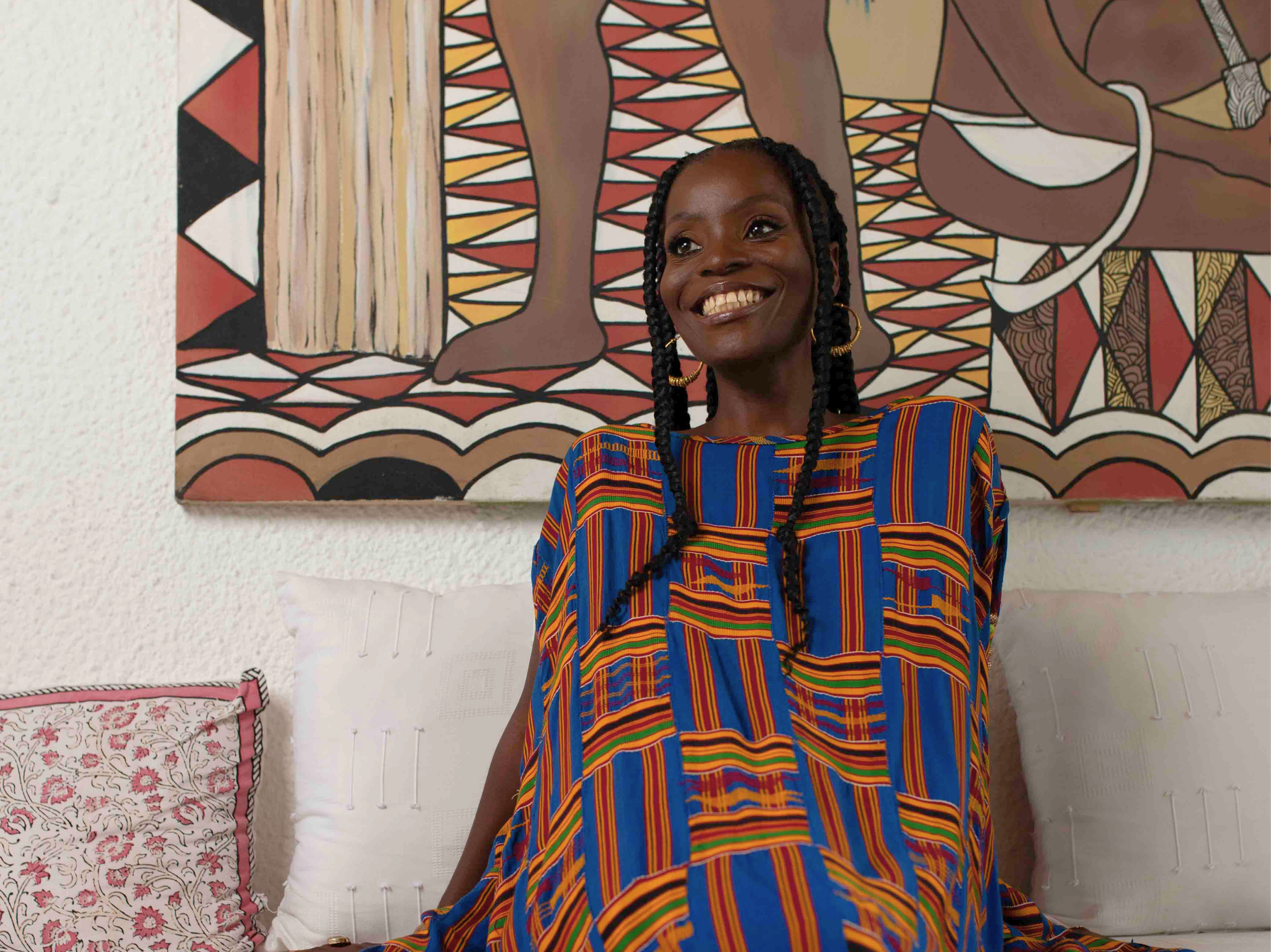
Nana Oforiatta Ayim (MA History of African Art, 2001)
From SOAS to a multi-layered cultural practice
Nana Oforiatta Ayim’s formative development was shaped at SOAS. Her Master’s degree in African Art History, under the supervision of Professor John Picton, proved pivotal for her professional direction and trajectory.
This marked a shift from her earlier path; her first degree was in Russian and Politics at the University of Bristol, followed by a year working at the UN.
“A job like this had been my dream from a very young age,” she reflects, “but I realised how slow politics was in terms of changing the status quo. Especially at the UN, where you have to toe the line. It wasn’t as transformative as I had hoped.”
Art, by contrast, had always exerted a pull. Reading John Picton’s work clarified both her intellectual direction and her standards, and his mentorship proved decisive. “He was the first teacher who really heard me and valued what I had to say,” she says. “At the time, I was a young African woman thinking about how to give value to African cultural knowledge, which was very unusual. Even in Ghana, people weren’t sure that was something to be taken seriously.”
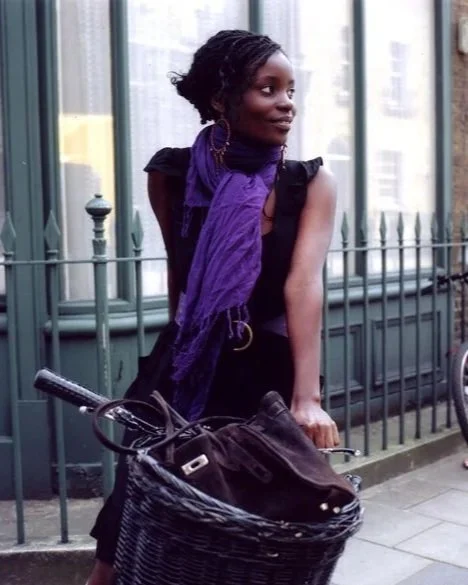
SOAS itself offered a rare intellectual environment. “Everyone around me was looking at Africa or Asia,” she recalls. “We weren’t trying to hook ourselves into the mainstream of ideas.”
Despite the tension of studying at an institution historically shaped by imperial agendas, she describes the period as exhilarating.
“It was a very formative and exciting space. There were rich conversations and music. I heard Edward Said speak. It felt like a laboratory. I’m not sure I would have had that kind of Petri dish anywhere else.”
The vision behind ANO Institute of Arts and Knowledge
After her Master’s, her practice unfolded in several directions at once. “I started everything at the same time,” she says. “I started exploring art and fiction through my writing and curating, and I set up my cultural institution at the same time, without knowing what it would evolve into.” Writing came first but soon proved insufficient. “The two-dimensional page was not enough for what I was trying to do,” she explains. “A lot of what I was working with had to do with sound and three dimensionality.”
Films followed naturally, often in the form of essay films inspired by French writer, photographer and director Chris Marker. “Film allowed me to work with image, sound, and rhythm. It felt like sculpting time.” Yet even film required a wider holding structure. “From the beginning, it felt like what I was doing was much larger than me and the subject of curation,” she says. “I realised I needed a bigger umbrella. That’s where institutionalisation came in.”
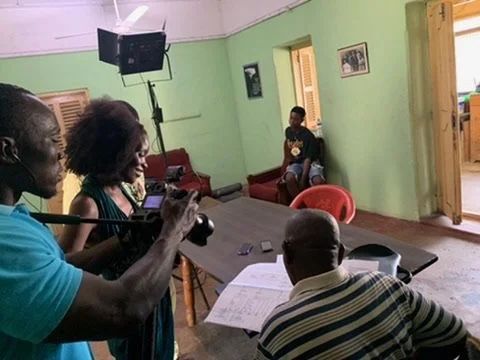
ANO Institute of Arts and Knowledge, now based in Ghana, emerged from this necessity.
ANO’s vision is connected to notions within Ghanaian cultural knowledge like that of Sunsum, the spirit that animates all things, including humans, nature, and even objects, and in which everything is interconnected and interdependent. It strives to understand and apply local and Indigenous knowledge by developing innovative models for education, research and practice
Nana’s practice is deeply shaped by her experience of growing up between cultures. “Not growing up in one place or as part of one dominant culture means you are always a little bit outside,” she says. This experience fostered an early understanding of cultural relativity. “You realise that no culture is static, and that there is no such thing as a dominant one. Each exists in relation to the others.”
That perspective underpins her critique of established cultural institutions. “Museums as we know them are a crumbling form,” she argues. “The encyclopaedic museum was built on imperial principles. The idea that one form of knowledge can contain the world is deeply problematic.”
“In Akan culture, objects are alive,” she explains. “They have spirit. You would never lock something in a glass case, because that would be like imprisoning a being to be stared at.” For too long, she argues, these worldviews have been dismissed as primitive or fetishistic. “But when you bring them in as part of a multiplicity of ways of knowing, you expand how we navigate the world.”
Her approach to the audience has also shifted over time. Early in her career, she felt compelled to address the outside world. “There was a sense of showing that we are worthy, that we can stand eye to eye with anyone,” she reflects. Now, she feels less urgency to prove anything. “My audience is first and foremost the African continent and its diasporas,” she continues. “The internal conversation has to happen before it moves outwards.”
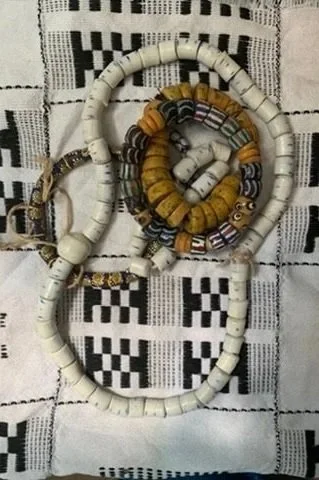
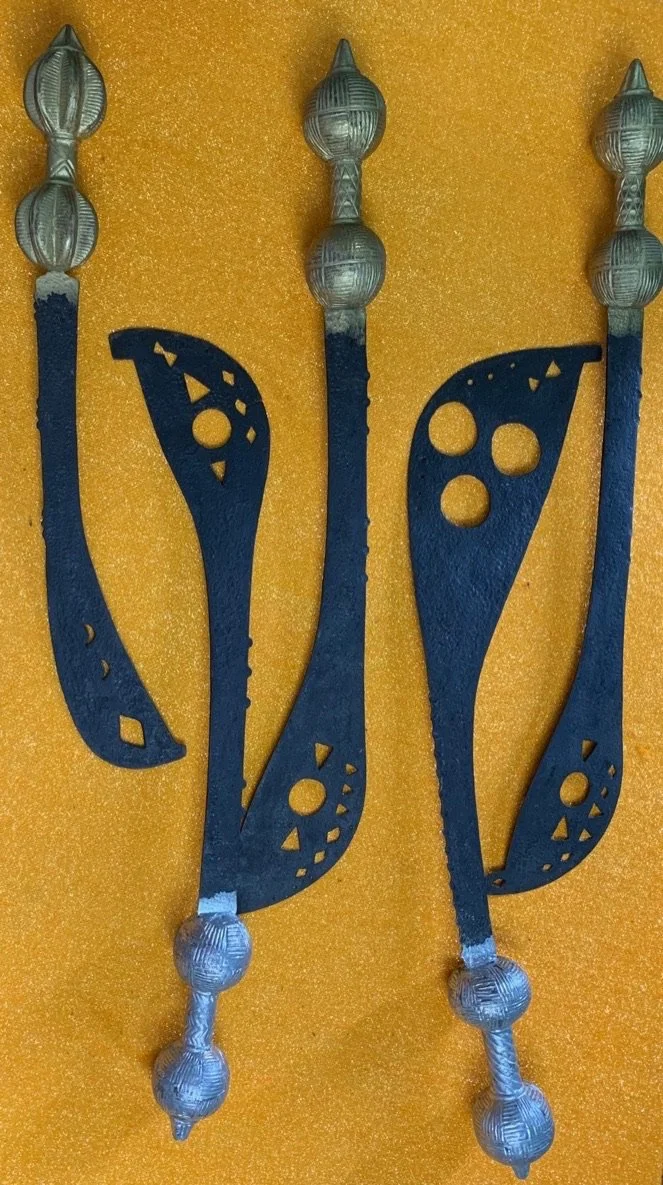
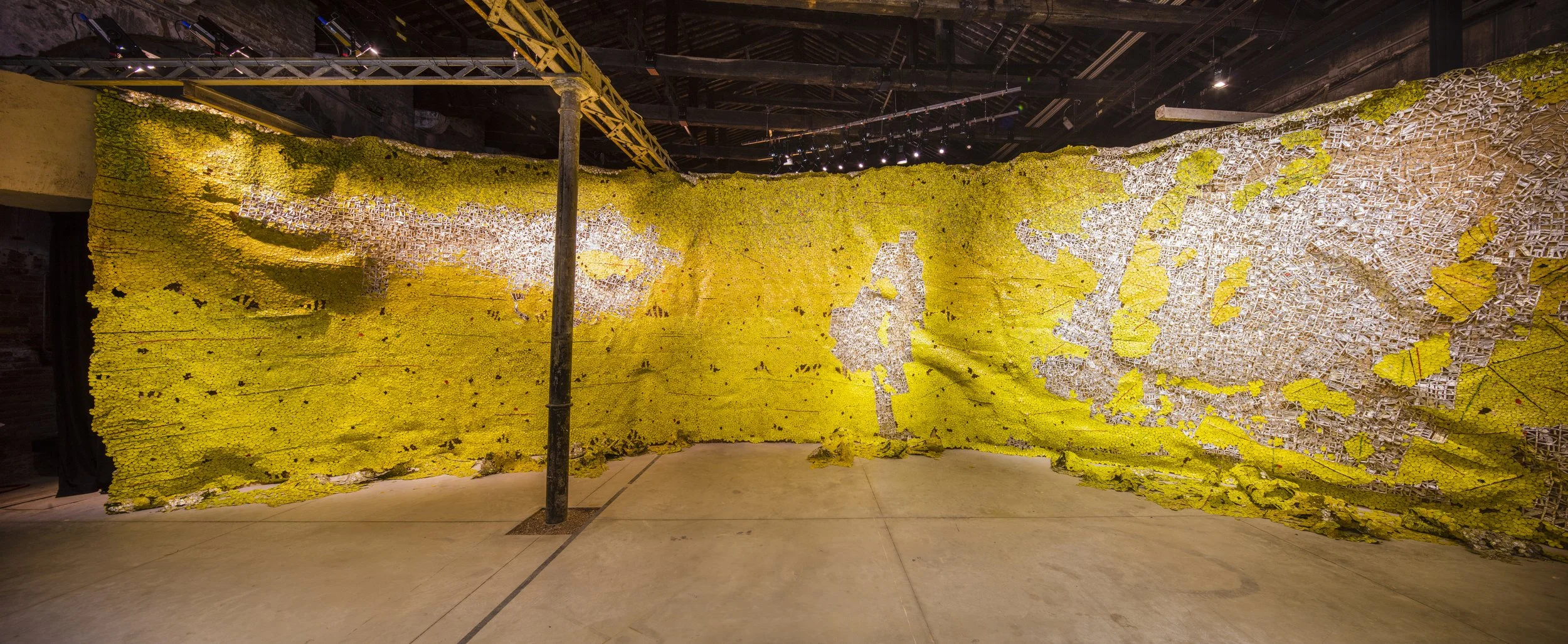
Since its beginnings in 2002, ANO has brought exhibitions to the Venice Biennale; engaged in young and established artists' development; opened conversations around and between food, design, fashion, architecture, literature, music, film; initiated workshops around living archives and future museums; set up fellowships for the next generation of young leaders in culture; and pioneered projects in experimental museology, such as the Pan-African Cultural Encyclopaedia, a digital and physical archive. The resource aims to document indigenous knowledge, art, and histories across African countries, recontextualising the continent's cultural narrative outside Western perspectives.
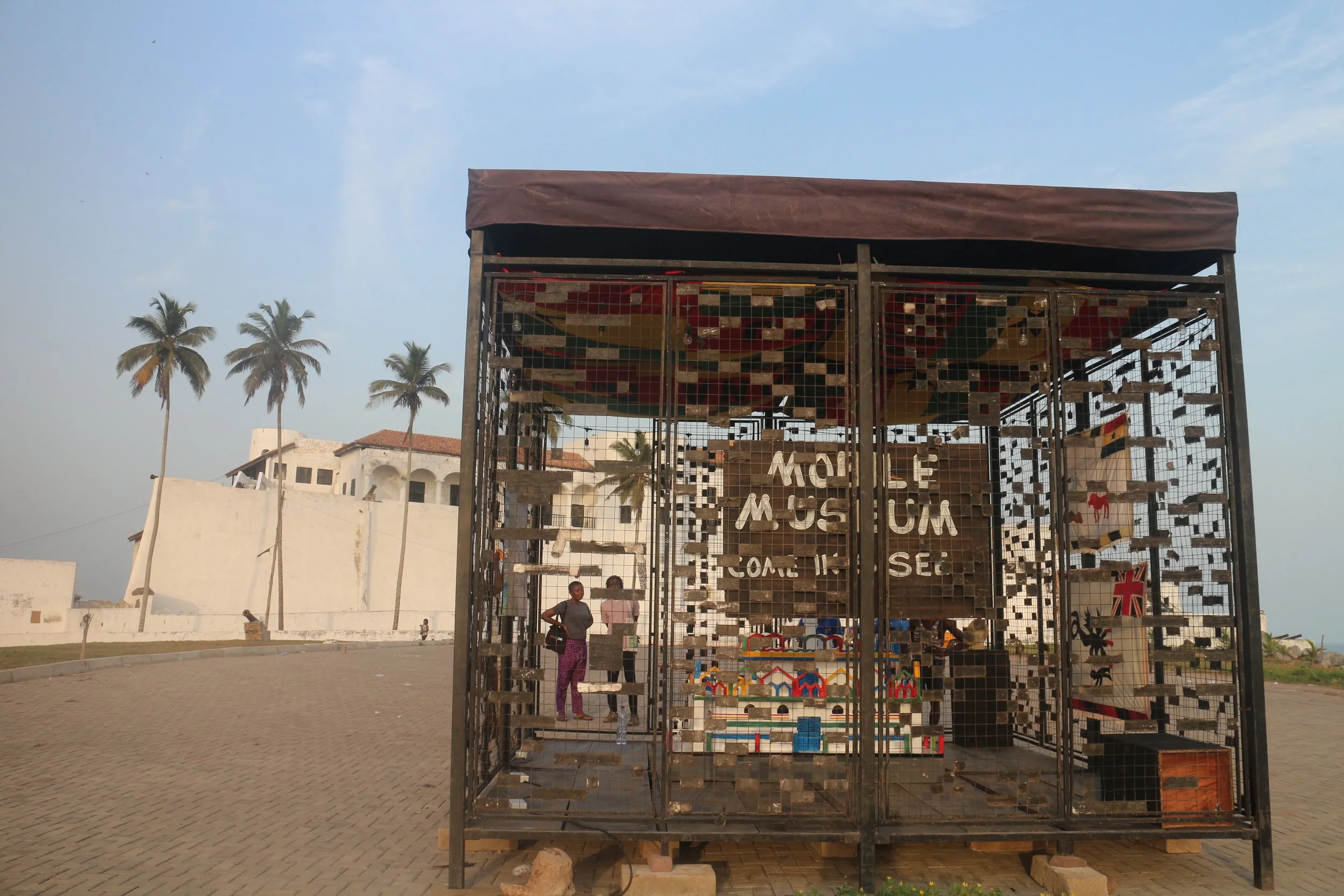
New infrastructures and new generations
Reflecting on her journey from SOAS to Ghana, she describes an evolving body of work that has unfolded organically as “different instruments of the same inquiry”, rather than a sequence of career moves.
Asked what advice she would give to emerging practitioners, Nana recommends “building your own infrastructure as soon as you can. Institutions may welcome your perspective, your labour, but they often remain structurally unchanged by your presence.” She also emphasises sustainability and care: “We neglected ourselves because the work felt so important. But care for yourself and your community has to be part of the work from the beginning.”
Looking ahead, she finds hope in what she sees emerging around her. “Seeing young people in Accra creating their own spaces fills me with pride,” she says. “They’re doing it differently from my generation, and that’s exactly what should happen.” For her, culture is not inherited intact but continually remade, a living process carried forward through relation, experimentation and care.
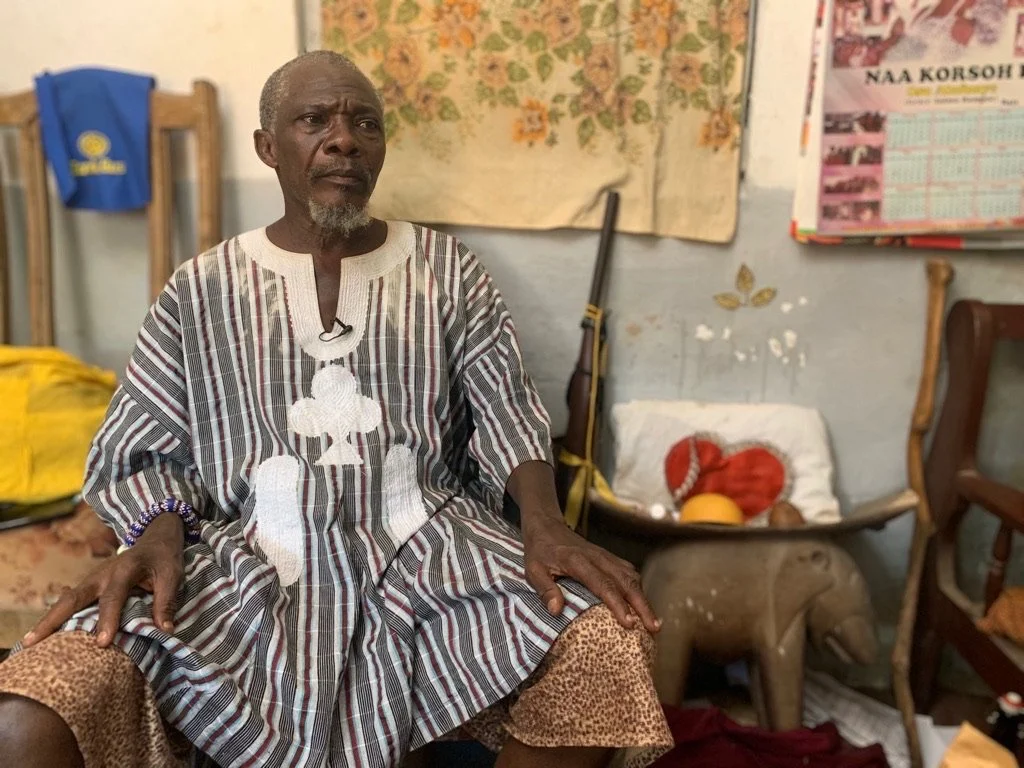
ANO has just launched the new beta of its Pan-African Cultural Encyclopaedia: https://culturalencyclopaedia.anoghana.org
ANO is organising the seminar New Ecologies, reflecting its evolving direction and expansion into the ANO University of Arts & Knowledge, on 23 May 2026. Registrations open soon at: university.anoghana.org/. Instagram page: ano_ghana.
All images’ credits: ANO 2026
Cultural Highlight
We asked: What is one cultural experience that inspired you?
“I really loved the film Sinners by Ryan Coogler. It blends different genres beautifully.
There’s one scene that completely blew me away: a young man sings his heart out and suddenly figures from different moments in history appear: a West African griot, a blues artist, a rapper. As he sings, time and space collapse.
The film explores the idea that musicians, or griots, can communicate across different realms, connecting with ancestors and those not yet born, an idea that often runs through my own work.
What amazed me most is how Coogler took something deeply African, something conceptual that I and many others have been working with for years, and translated it into a contemporary American film. It felt like he broke through the medium of film itself. For me, that was incredible.”
Features
-
![]()
Dr Gus Casely-Hayford: connecting communities through art and music in East London
-
![]()
Sutima Sucharitakul: building a global platform for Thai Contemporary Art
-
![]()
Colin Chinnery: creating a new museum model in China through sound